



The Intercontinental Seminar: Educating in Difficult Times, part of the Teresian Association's Socio-Educational Proposal (PSEIT), took place from September 23 to 27 in Lima, Peru. This report details the seminar and its conclusions.
The event welcomed a total of 52 representatives from Colombia, Argentina, Mexico, the Dominican Republic, Uruguay, Brazil, Bolivia, Chile, Guatemala, and Peru, from TA's educational centers and social projects. Also present were Elisa Estévez, a member of the Association Council, representing the President; Loudette Pascua, from General Administration; and Magda Alcalá, from the TA Youth Network.
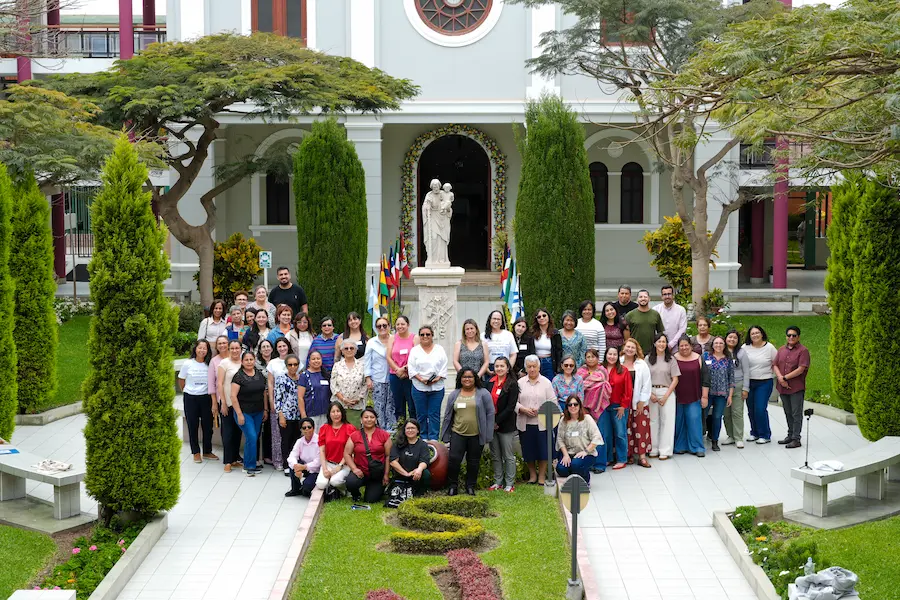
Open paths
The opening ceremony took place on Wednesday, September 23. That same day, after the welcome address, the participants were introduced and given the seminar materials.
On Thursday, September 24, the event began with greetings from Flor Sobrino, the delegate from Peru, and Enrique Revilla, president of ACIT-Peru. In her remarks, Flor Sobrino expressed her appreciation for the time dedicated to discussing diversity, how we perceive others, and how we embrace differences.
Enrique Revilla presented Peru as a diverse country, “mega-diverse”, because of its three natural regions, its 48 languages and 55 indigenous peoples: “A country of all bloods, hardworking, resilient and entrepreneurial.”
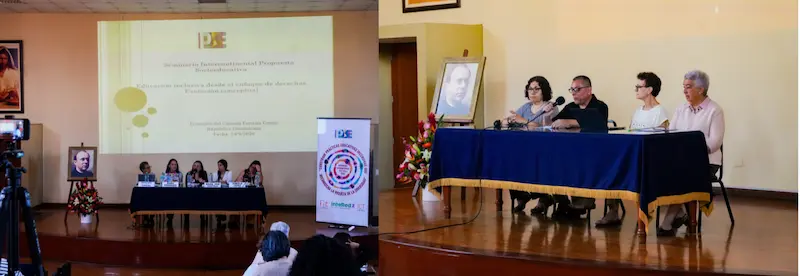
Elisa Estévez, on behalf of the TA President, Gregoria Ruiz, began her remarks by thanking everyone for their presence and mission, wherever they may be. She asked how to ensure that our educational spaces, where each person is, become places where their identity and life are recognized. She acknowledged that PSEIT was created to build a shared vision, which has offered a common framework for joint reflection on the challenges facing education in the Americas. “The mission guidelines for the 2023-2028 five-year period connect directly with the Seminar, which speaks to a shared mission. What is shared here enriches the path the Institution has already embarked upon. That this year's Seminar invites us to pave the way for inclusion is a challenge.” These final words resonated throughout the meeting room.
Eliana Corbett, current Coordinator of the Proposal Commission, also alluded to the presence of the Socio-Educational Proposal (PSE) in the educational realities of the TA: “Poveda’s thinking is relevant and inspiring,” she said. She then traced the history of the birth of the Socio-Educational Proposal in the Americas and welcomed everyone. Following this, she declared the 2026 seminar open.
Round tables
The working dynamic designed for the seminars began with a round table where each invited person, through their presentation, placed the attendees in front of the theme of the day and promoted reflection and dialogue.
In the first roundtable discussion, the topic was divided into three reflections: –Strengthening inclusion and diversity as rights, –No one is inherently different, and –Educational practices that help people experience diversity. One of the key ideas highlighted in this dialogue was that the term “inclusion” has evolved from the previous term “integration.” Now, “inclusion” is considered a more comprehensive term, encompassing the collective participation of all stakeholders.
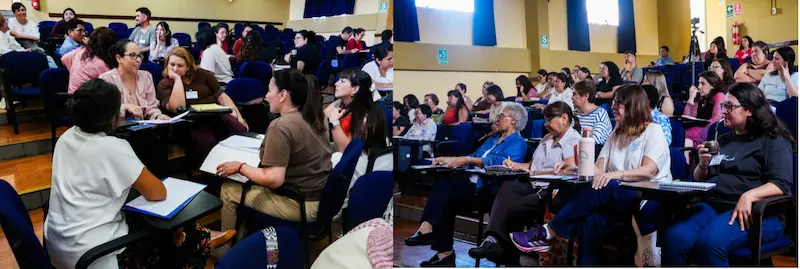
The phrase “no one is the only one who is different” prompted reflection on the kind of school being built. It was emphasized that talking about inclusion must lead to redesigning schools to make them transformative. “Our educational practices must be geared towards experiencing diversity in everyday life and in every educational act and personal interaction.”
The second day's roundtable discussion focused on the theme: “Strengthening the response to diversity as a manifestation of human dignity.” “The three speakers emphasized that currently in our countries, and therefore in our family and social realities, there is widespread racism, marginalization, and discrimination. These situations must be addressed in our educational settings, insisting that all educational experiences be inclusive, promoting education for empathy, tolerance, and sincere and open dialogue,” explained representatives from the PSE.
On the third day, the round table focused on “developing processes aimed at enabling young people to be agents of change and transformation.”
An experience of AI intervention in the classroom was presented as a strategic pedagogical resource for teachers. “It must be used appropriately, teaching its use to students, especially those with disabilities or learning difficulties.” And one piece of advice resonated: “Humanize the use and management of AI.”
It was concluded that working with young people is important so that they can live experiences without discrimination or marginalization.
Common concerns
The three round tables, from different perspectives, led to a series of common concerns: recognizing diversity as a reality inherent to humanity, identifying the barriers that generate discrimination and exclusion, and taking on the challenge of transforming our educational practices.
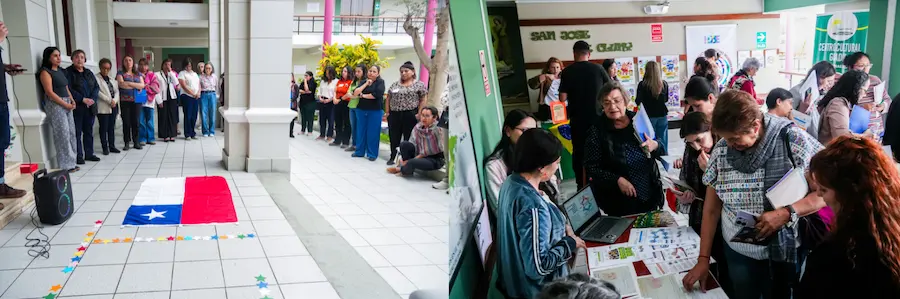
In the afternoon, the communications were presented sharing the experiences lived and developed in the different schools and social projects of each country.
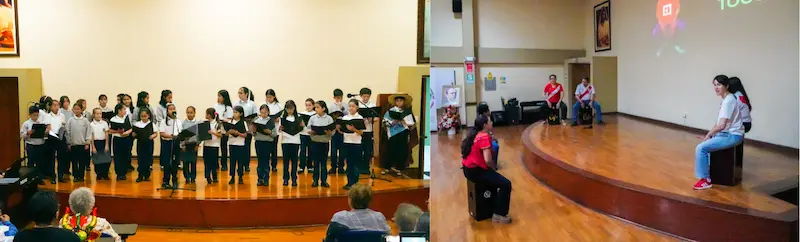
Then came the day of the cultural festival, a festive gathering where each country presented dances and customs while sharing souvenirs, sweets, typical drinks, and more. This year, Peru, as the host country, featured the children's choir and the primary and secondary school dance groups from the Isabel Flores de Oliva School. They also closed the festival with a performance by the attending teachers who demonstrated the beauty of the Peruvian cajón, engaging the audience in the process.
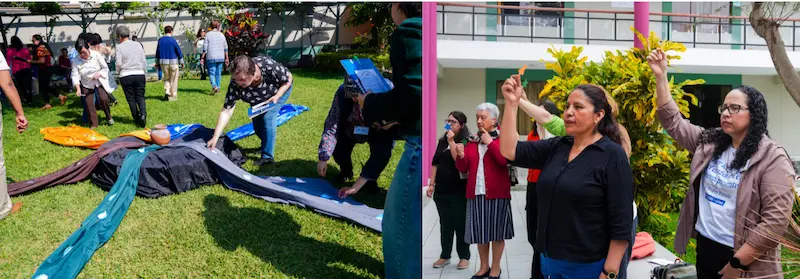
On September 26th, a celebration was held to recognize and thank Vera María Candau for all her dedication of time and effort in making the socio-educational proposal a reality in America. This celebration included the participation of all seminar attendees and everyone who joined virtually to express their gratitude and appreciation. It was a very moving and well-attended event.
Walking together
Finally, everything discussed with the reference groups was shared, with the aim of reaching agreements that will be adopted in the centers and projects, in that common mission, and which will be made known later.
However, it is possible to anticipate those aspects that continue and will continue to resonate:
- Eliminate barriers to experience diversity.
- Never forget that diversity is inherent to humanity.
- Diversity is a cross-cutting theme that the entire community must embrace.
- The student-family-school triad and co-responsibility remain relevant and must be addressed with renewed creativity.
- Let's not forget that language must be inclusive and that a gender perspective is important.
- It is necessary to strengthen the sense of community and belonging in our centers and projects.
- We must pay attention to ensuring the retention of our students in our educational centers.
- Integrate the pedagogical proposal with the administrative one to work on the sustainability of educational centers, in light of the challenges of the times.
The PSE (Socio Educational Porposal) in the countries where it is present is an existing reality that helps us move forward together as a Teresian Association, making visible the pedagogical and social thought of Saint Pedro Poveda . “We are witnesses that his thinking is relevant today and continues to inspire and encourage others to join us and become better educators,” its members affirm.
“Give me a vocation and I will give you back a method and a system.” (Saint Pedro Poveda).
International Commission of the Socio-educational Proposal.
 Published in News
Comments will not be posted automatically, they are subject to moderation.
The email address WILL NOT BE VISIBLE in the comments section.